Business · Wedding venue & rural estate★ Case study
Buckland Estate: power you can count on for the big day
A wedding venue can’t afford a blackout. We rewired the estate and gave it solar, a battery and a 220 kVA generator, with the grid kept for emergencies, so the power stays on when it matters most.
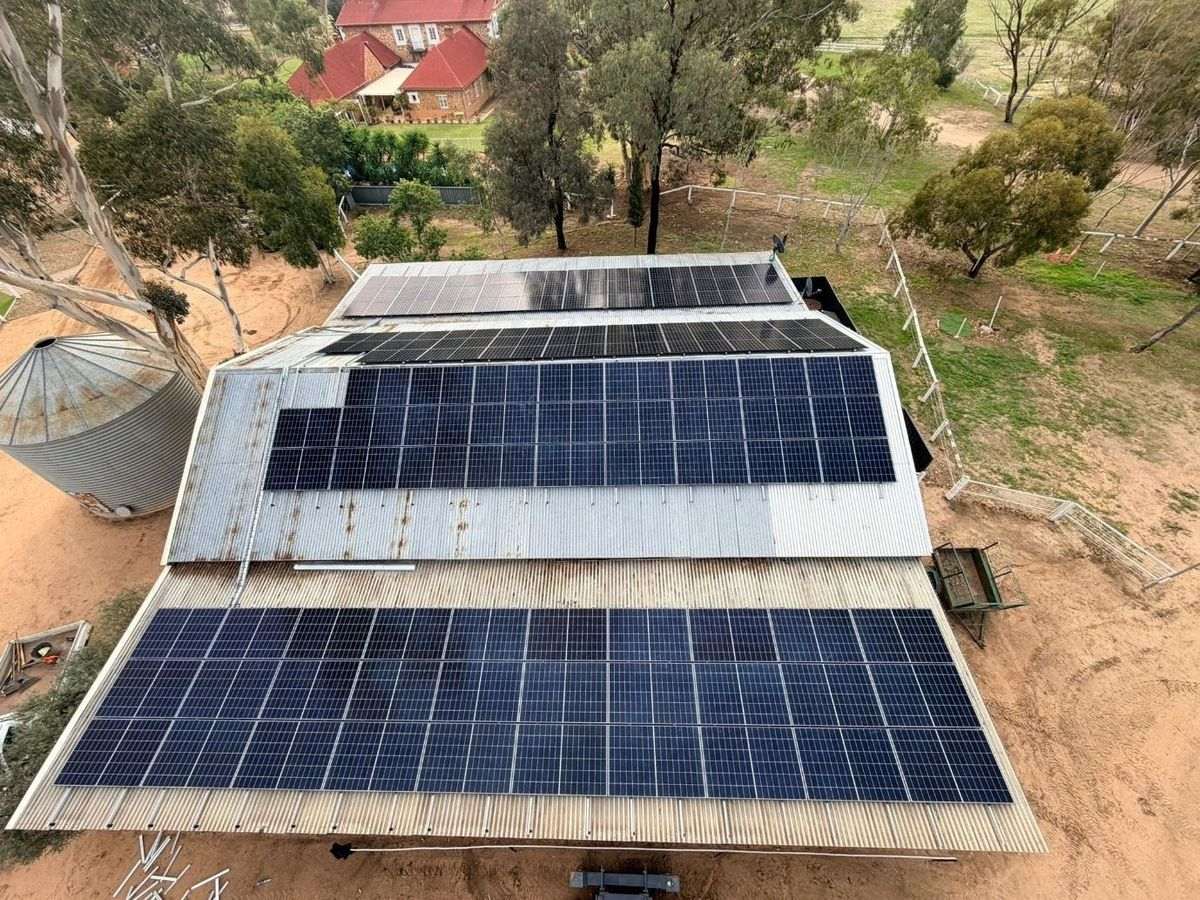
Elevated view of solar panels on two roof sections of a farm building.
LocationBuckland, Avon Valley (near Northam), WA
CustomerBuckland Estate, a wedding venue and rural estate with a homestead, workshop, barns, a granary and silo, caravan sites and event spaces
SystemAbout 98.3 kW of rooftop solar (207 × 475 W panels), 200.6 kWh of battery storage and a 220 kVA Genesys/Blue Diamond GEN220CT generator with changeover. The system runs off-grid when carrying the loads, and the existing 2-phase grid connection is kept so that in an emergency the system can be isolated and grid power run through.
EquipmentTongwei 475 W panels, 2 × SAJ CHS2 50 kW inverters with a 100.3 kWh battery each, 2 × 50 kVA inverters (about 200 kVA of inverter capacity in total), Elekeeper monitoring, 220 kVA Genesys/Blue Diamond GEN220CT generator
InstalledAugust 2026 · monitoring handed over October 2026
Gallery
On site at Buckland
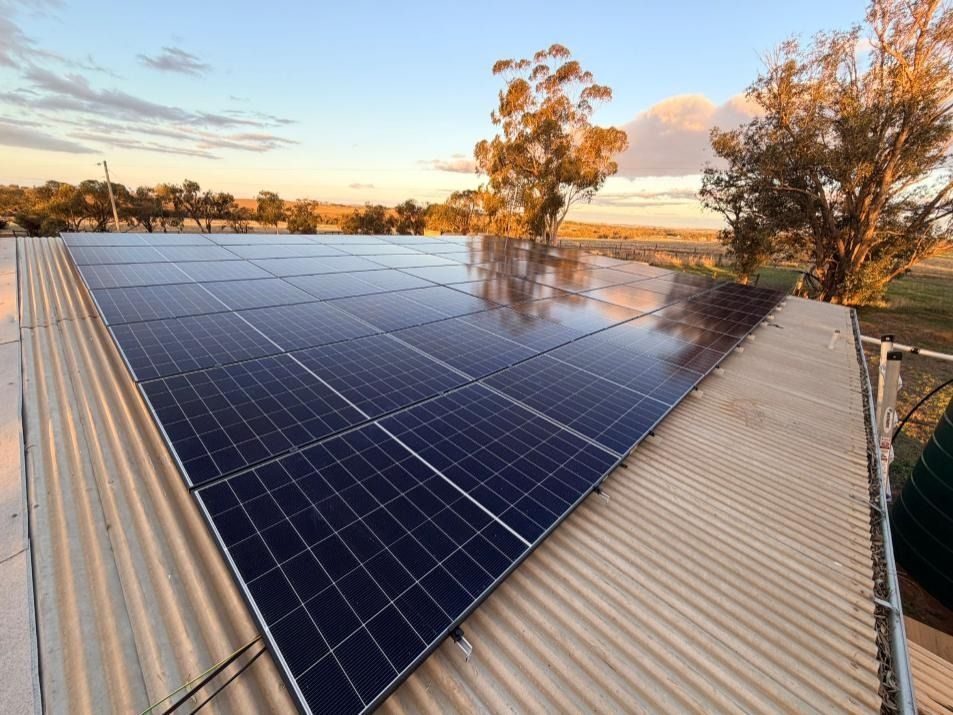
Rooftop solar array on a Trimdek roof at sunset, with gum trees behind.
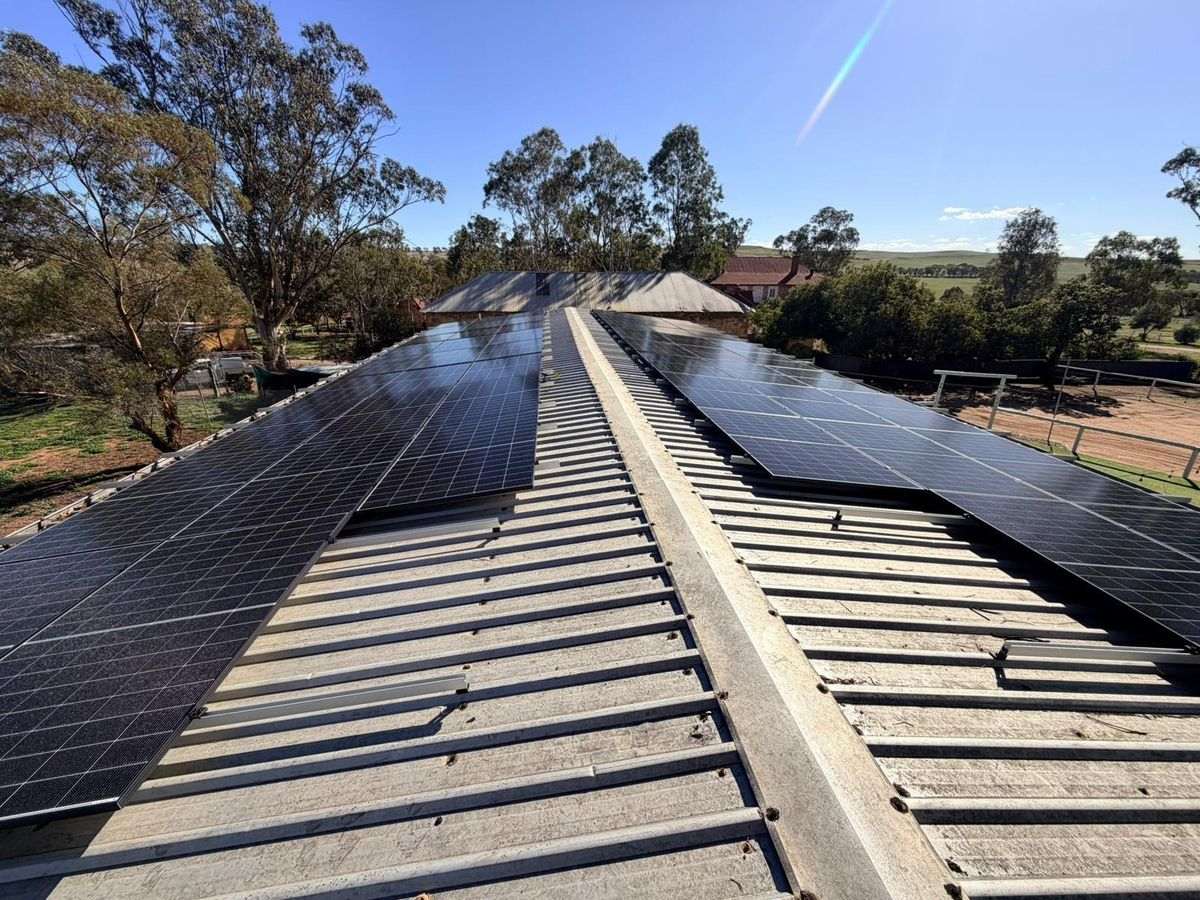
Solar panels running along both sides of a long Trimdek roof ridge.
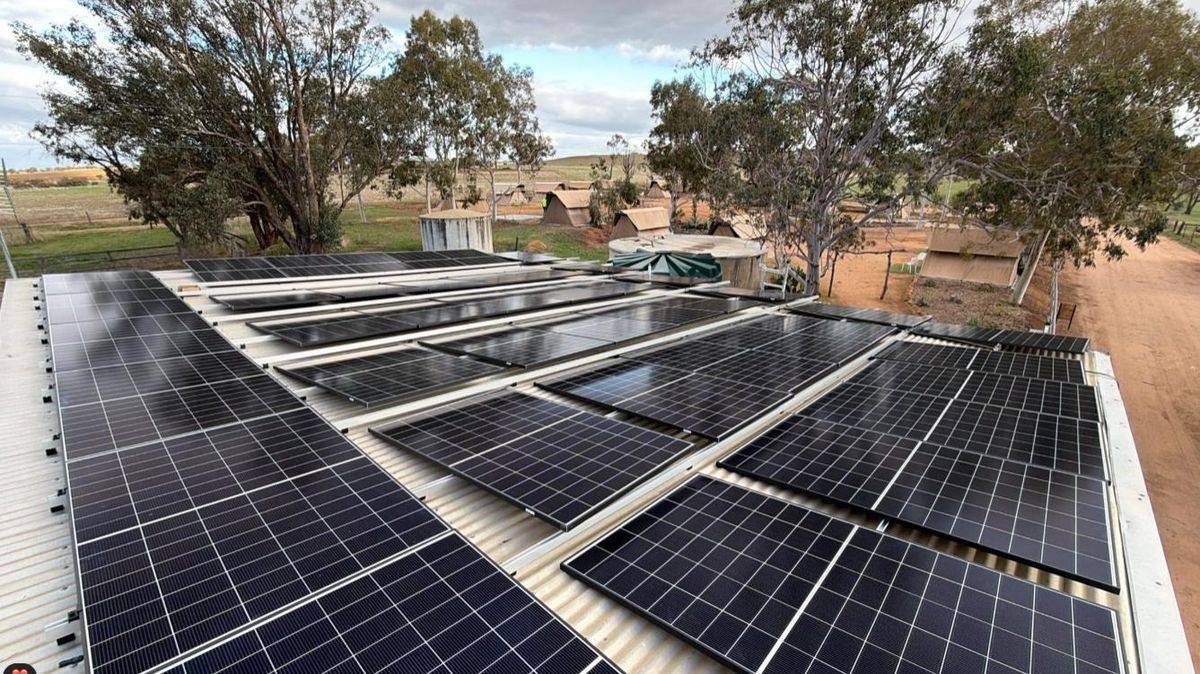
Rows of solar panels across a roof, with trees and paddocks beyond.
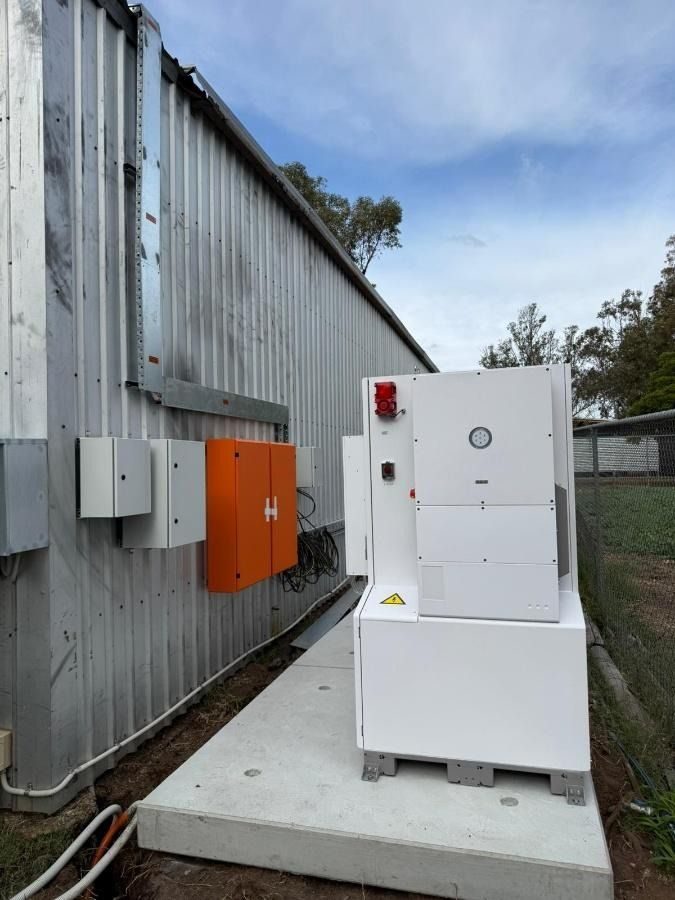
White battery and inverter cabinet on a new concrete slab beside a metal-clad shed, with an orange enclosure and grey wall-mounted boxes.
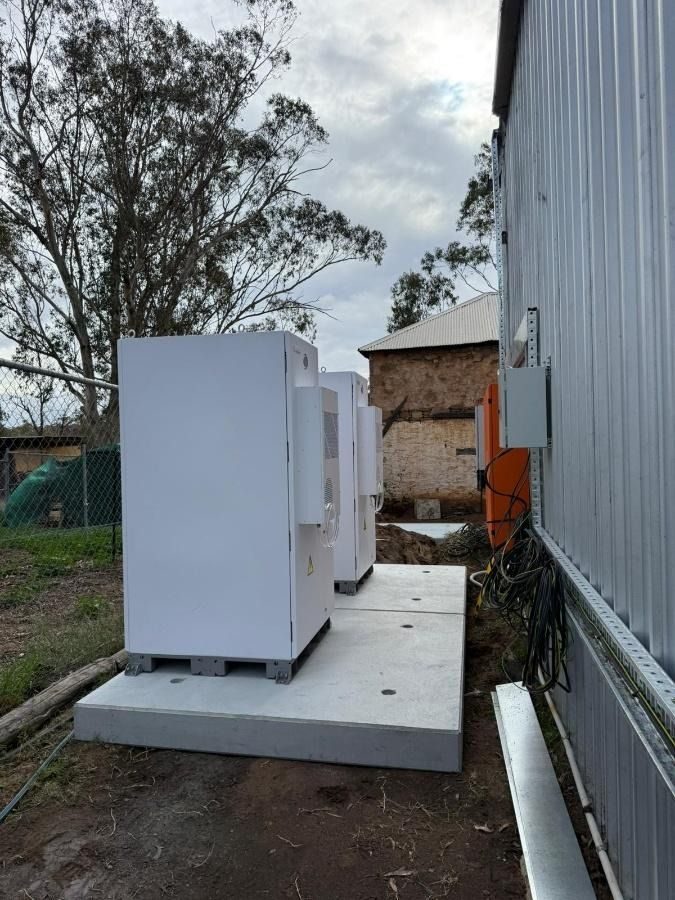
Two white battery and inverter cabinets on a new concrete slab beside a metal-clad shed, with an old stone building behind.+1 more photos
The challenge
One day to get right, and a supply that couldn’t keep up
Buckland Estate is a wedding venue. When a couple has one day to get right, the lights, the music, the kitchen and the bar can’t drop out halfway through the speeches. For the owner, power reliability was the top priority, for his business and for the special days his guests share at the estate.
The property didn’t make that easy. It had a 2-phase grid supply that was already supply constrained, on a big rural site with a house, workshop, barns, granary and silo, caravan sites and event spaces, and more cabins and caravan sites planned. The existing switchboards also needed work to bring them up to standard.
What we did
More than one way to keep the power on
The objective was to create a robust, reliable microgrid that used parts of the existing infrastructure, upgrading and improving it where required. The end result: three different potential sources of power, so the site has the utmost reliability. We started with a detailed site investigation and audit to understand the problems and constraints on site. With that information, we worked through several design iterations to optimise and refine the design into the best possible outcome for the client.
A new heart for the site: We rewired the property from a new, central main switchboard location, and replaced and upgraded every switchboard to current standards.
Three-phase underground: New underground three-phase runs to the main house, the workshop, the new powered van sites and a pillar ready for a future cabin.
Solar and battery: 207 Tongwei 475 W panels (about 98.3 kW), 2 × SAJ CHS2 50 kW inverters, each with a 100.3 kWh battery (200.6 kWh of storage in total), plus 2 × 50 kVA inverters, for about 200 kVA of inverter capacity in total.
Solar and generator, alone or together: A 220 kVA Genesys/Blue Diamond GEN220CT generator with changeover. The solar and generator can run independently or together, depending on the loads they need to handle. In extreme cases the two can be stacked to create extra capacity on site.
Off-grid, with the grid kept for emergencies: The estate runs off-grid when the system is carrying the loads. We retained the existing 2-phase grid connection, and in an emergency the system can be isolated so grid power runs through to the site.
Built for what’s next: The infrastructure, designs and connecting infrastructure were all sized for potential future expansion without over-capitalising on labour and materials, leaving headroom for future increases and system expansion.
Estate works & handover: Workshop outlets, RGB floodlighting on the workshop, silo, barn and granary, chandelier barn power and lighting, and caravan power via four pillars with 12 outlets. Elekeeper monitoring handed over in person in October 2026.
Delivery was scheduled and managed around the client’s operating schedule. The estate kept trading throughout, with no loss of revenue while the system was being installed.
Project package
Equipment and electrical scope
Category
Equipment
Qty
Total
Solar panels
Tongwei 475 W
207
98.325 kW
Battery inverters
SAJ CHS2 50 kW all-in-one cabinets
2
100 kW
Additional inverters
SAJ R6 50 kVA inverters
2
100 kVA
Total inverter capacity
CHS2 cabinets plus additional inverters
–
about 200 kVA
Battery
100.3 kWh per CHS2 cabinet
2
200.6 kWh
Generator / backup
Genesys/Blue Diamond GEN220CT 220 kVA generator with changeover
1
220 kVA
Grid
Existing 2-phase grid supply (retained)
–
Retained; system can be isolated in an emergency so grid power runs through
Mounting
S-5! mounting on Trimdek roofs
–
–
Monitoring
Elekeeper app
–
Handed over Oct 2026
Electrical scope
Detailed site investigation and audit of problems and constraints, then several design iterations
Property rewired from a new, central main switchboard location
Every switchboard on the property replaced or rectified, fixing non-compliance found
New underground three-phase runs to the main house, workshop, new powered van sites and a pillar for a future cabin
Generator changeover: generator alone, generator with solar assisting (generator grid-forming), or both stacked for extra capacity
Existing 2-phase grid connection retained, so in an emergency the system can be isolated and grid power run through
Caravan power: four distribution pillars with 12 outlets, including trenching, concrete and reinstatement
Workshop outlets, RGB floodlighting (workshop, silo, barn, granary), chandelier barn power and lighting, tree area and corner posts
Infrastructure sized for future expansion without over-capitalising
Commissioning, owner walkthrough and Elekeeper monitoring handover (October 2026)
No pricing shown.
The results
Power the venue can count on
No power billsince switch-on (reported result to date, this site)
Generator not neededthe backup generator hasn’t had to run for power to date
Three power sourcessolar and battery, a 220 kVA Genesys/Blue Diamond GEN220CT generator, and the grid, which can be run straight through in an emergency
Renewables firstdesigned to run mainly on solar and battery
Ready to growsized with headroom for future expansion
Results to date, this site: since switch-on the client has had no power bill, and the backup generator has not been needed to provide power to date, as reported by National Renewable in October 2026. These are not guarantees; results depend on weather, site usage and how the system is operated.
Take it with you
Download the case study (PDF)
A print-ready A4 summary, with project photos, of the Buckland Estate project. Every copy, printed or shared, carries a QR code that links back to this page.
QR encodes the page URL + ?utm_source=qr&utm_medium=print&utm_campaign=case-study so scans show up in Google Analytics.
Related projects
More projects across WA
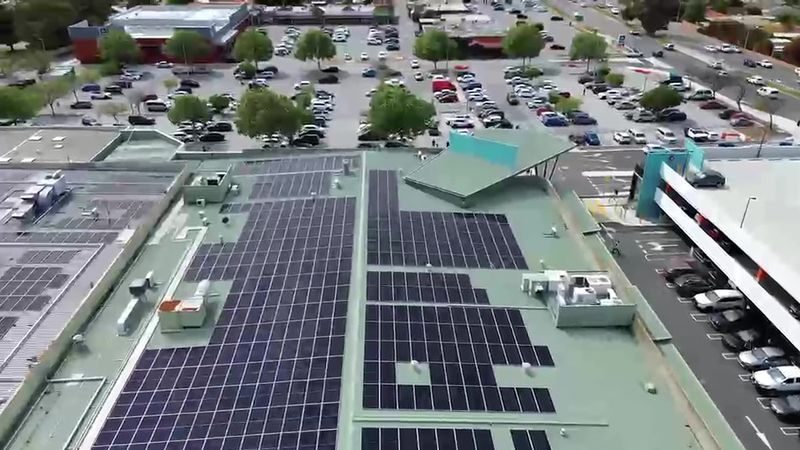
Drone view of the shopping centre roof with solar arrays and the car parkIn progress
Business
Kardinya Park Shopping Centre
Kardinya · Perth metro
In progress: about 1 MW of rooftop solar on the main centre, plus a separate 161 kW system on the Medical Centre, with a 1.78 MWh Deye battery, being installed behind the meter. PV and Medical Centre complete; inverters, battery and switchboards to come.
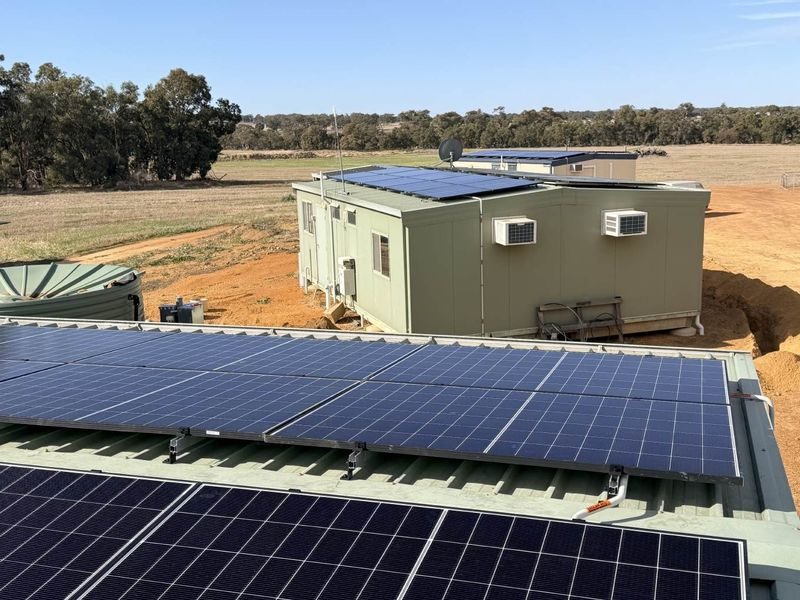
Finished rooftop solar array on a transportable building, with another solar-roofed building and open paddock behind.★ Case study
Business
Balco Hay
Wannamal WA · North of Perth
Off-grid solar and battery microgrid for site accommodation at one of Balco’s production facilities: 48.45 kW of solar, 125 kW of inverters and a 100.3 kWh battery, added alongside the existing systems.
Rows of ground-mounted solar arrays on a grassy hillside, with a steel cable tray in the foreground.★ Case study
Business
Wise Winery
Eagle Bay, near Dunsborough · South West
About 258 kW of new solar and about 282 kWh of usable battery: a ground mount and rooftop array at the main winery, plus off-grid systems for the back shed and Wise Winery House.
SolarBatteryOff-grid
About 85% self-sufficient in August 2026 (main winery site)
When the power can’t fail, you need more than one way to keep it on. We design systems that handle real rural loads, from workshops and lighting to caravans and events.