
Maximizing Output: Understanding Solar Panel Efficiency in Australian Conditions
Admin
October 16, 2025

In Perth and across Australia’s sun-drenched regions, even small efficiency gains can mean big savings for homeowners and businesses. At National Renewable, we work with customers to ensure their solar systems are designed with Australia’s unique climate in mind. Australia’s sunshine provides tremendous potential for solar power, but local weather also poses challenges. Abundant solar irradiance makes Australia an ideal place for photovoltaics, yet scorching summer heat and arid dust can reduce panel output. We account for these factors in our designs to maximize output.
Australia’s Solar Advantage and Its Challenges
The Australian sun delivers intense radiation – on average much higher than in many other parts of the world. This means even ordinary panels generate plenty of electricity under Perth’s bright skies. However, that same intensity heats the panels and introduces unique stresses. For example, solar cells typically run about 20 to 30°C hotter than the surrounding air; on a 65°C roof, the output might drop by roughly 10 to 15%.
Coastal Perth usually avoids the worst dust, thanks to winter rains. Inland arid zones and bushfire smoke, by contrast, can coat panels in dust or soot. Even a thin layer of dust can block sunlight and cut output by up to 30%. Understanding our climate – plentiful sun offset by heat and soiling – is the first step to optimizing any system for Australian conditions.
Solar Panel Technology and Efficiency
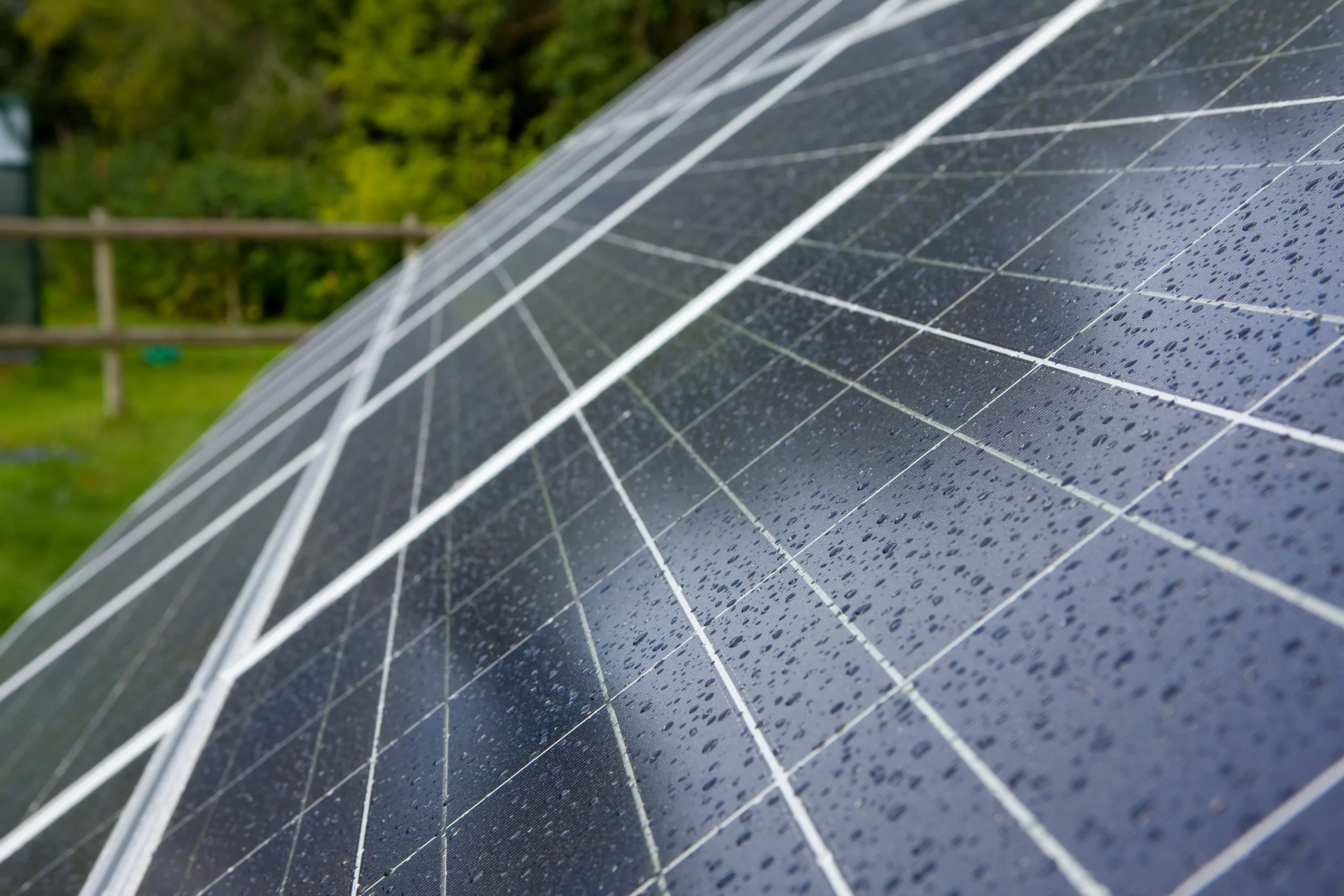
Solar panels today convert about 18% to 24% of sunlight into electricity. Black monocrystalline modules (the usual rooftop type) generally run above 20% efficiency, while older blue polycrystalline panels sit around 13% to 16%. Top-performing mono panels now reach close to 24%. Advanced tandem or perovskite-silicon cells have broken 30% in lab tests.
Advanced module designs (like bifacial or tandem cells) highlighted in Innovation in Action: Latest Solar Technology Trends in Australia with National Renewable promise to further boost panel efficiency. By capturing reflected light and cutting losses, these innovations could increase the output of future arrays. For now, we prioritize proven high-efficiency modules – even a 1% to 2% efficiency edge nets noticeably more energy over the system’s life.
Managing Heat for Better Performance
As silicon heats up, output drops. Typical silicon panels lose about 0.3% to 0.4% of power for every degree above 25°C. In Perth’s summer heat, that adds up. To mitigate this, arrays should allow airflow under the panels and avoid dark roof surfaces. Elevating panels slightly or using lighter-colored mounting can keep modules cooler and recover a few percent of output on very hot days. These passive cooling measures help maintain better performance under Australia’s intense sun.
Orientation, Tilt, and Installation
In the Southern Hemisphere, panels should face true north to capture maximum sun. Pointing north-east or north-west still yields about 90% of peak output, but panels facing due east or west generally top out at only around 85%. This means an east-west array will produce roughly 15% less energy than a north-facing one. We always prefer north-facing roof space when designing systems.
Tilt angle also matters: Perth’s latitude (around 32°S) means a tilt between 20° to 35° balances summer and winter sun exposure. Many roofs already have a suitable pitch, but flat roofs can use small tilt frames or trackers if needed. Our designers tailor tilt to each customer’s usage pattern (for example, a shallower tilt for summer-heavy loads).
Installation techniques are also evolving. For example, improvements in mounting hardware and inverter technology – as mentioned in Innovation in Action: Latest Solar Technology Trends in Australia with National Renewable – can extract extra performance from the same panels. Microinverters or power optimizers, for instance, let each panel operate at peak output even if one module is shaded or dirty. In short, correct orientation and modern equipment ensure we capture the most sunlight available.
Maintenance and Long-Term Performance
Maintaining peak output requires upkeep. Dust, pollen, and soot can accumulate and block sunlight. A thin layer of dust can cut efficiency by up to 30%, so we advise rinsing panels after the dry season or major dust events. Advances like self-cleaning coatings and robotic cleaners exist for large arrays, but for homes, a quick hose-down is usually enough to keep panels performing well.
Over decades, panels slowly degrade. Most lose about 0.5% of output per year, meaning a good panel will still produce around 90% of its original power after 20 years. System designers account for this by slightly oversizing arrays so that two decades later the output still meets demand. Using premium panels and professional installation also minimizes early degradation, ensuring long-term efficiency.
Making Every Ray Count
Maximizing solar output in Australia is about making every ray count. By optimizing panel technology, orientation, and maintenance, homeowners and businesses can significantly increase their solar harvest. Our team at National Renewable applies these best practices on every project, always seeking new ways to improve efficiency. We stay informed on the latest solar innovations and industry developments.
Our approach aligns with the cutting-edge trends featured in Innovation in Action: Latest Solar Technology Trends in Australia with National Renewable, ensuring every available watt of sun is captured. We combine proven design principles with advanced technologies so each installation in Perth delivers maximum performance.
As leaders in the WA solar market, we are committed to efficient solar energy design that creates real value for our clients. If you’re looking to turn Perth’s plentiful sunshine into lasting benefits, our team can help you do it smarter and more efficiently than ever.
Recent Post
Dont Hesitate To Contact Us
Got questions, ideas, or feedback? We’re here to help. Reach out to our team today and let’s explore how we can work together to bring your renewable energy vision to life.